
This article is part of Guides to Off-Market Selling in our Resource Center.
The cost to sell a house in Kansas City through a traditional listing usually lands between 8 and 12 percent of the sale price once you add up agent commission, seller closing costs, inspection repairs, buyer concessions and the two or three months of mortgage and utility payments while you wait. On a $275,000 home, that is roughly $22,000 to $33,000 that never reaches your bank account, and on an older house with deferred repairs it can run higher. A cash sale skips most of those lines but starts from a lower price. Every figure below is a general Kansas City market range, not a Best Offer KC price; our offer on your house is specific to the house and comes to you in writing. This article walks through where every dollar goes in both routes so you can compare what you actually net, not the headline number.
Agent commission is still the biggest line item
The 2024 National Association of Realtors settlement changed the rules: a seller is no longer required to offer compensation to the buyer’s agent, and that offer can no longer be advertised in the MLS. In practice, most Kansas City listings still pay somewhere between 5 and 6 percent total, because buyers who are stretching to afford a down payment ask the seller to cover their agent, and sellers who refuse often lose those buyers.
- At 5 percent on $275,000, commission is $13,750.
- At 6 percent, it is $16,500.
You can negotiate the listing side, and some sellers do offer less to the buyer’s agent. But budget for the full range until you have a signed agreement. For some homes, the math argues that not every home needs a realtor at all.
Seller closing costs in Kansas City, line by line
Closing costs are the fees paid at the title company on closing day. Missouri and Kansas generally do not charge a state real estate transfer tax, unlike some states, but confirm the charges on your own settlement statement with your title company. Here is what you will see on a Kansas City seller’s settlement statement:
- Owner’s title insurance policy. Who pays for the buyer’s owner’s policy is set by local custom and by your contract, and custom can differ between the Missouri and Kansas sides of the metro. Ask your title company. Expect a four-figure premium on a home in the $250,000 to $300,000 range.
- Settlement or closing fee. The title company’s fee for handling the closing, usually a few hundred dollars per side.
- Prorated property taxes. Property taxes in the metro are generally billed for the year near its end, so at closing the seller usually credits the buyer for the part of the year the seller owned the home. Close mid-year and that can be about half of the annual bill. Your title company calculates the exact proration.
- Payoff and recording fees. Your lender charges for the payoff statement and wire, and the county charges to record the deed and the release of your mortgage.
- HOA transfer or estoppel fees if the home is in an association.
- Buyer concessions. Not technically a closing cost, but in a slower market many buyers ask the seller to pay $3,000 to $5,000 toward their own closing costs, and it comes straight out of your proceeds.
If you want the plain-language version of what happens at that table, read what a title company actually does.
Inspection repairs: where Kansas City sellers get surprised
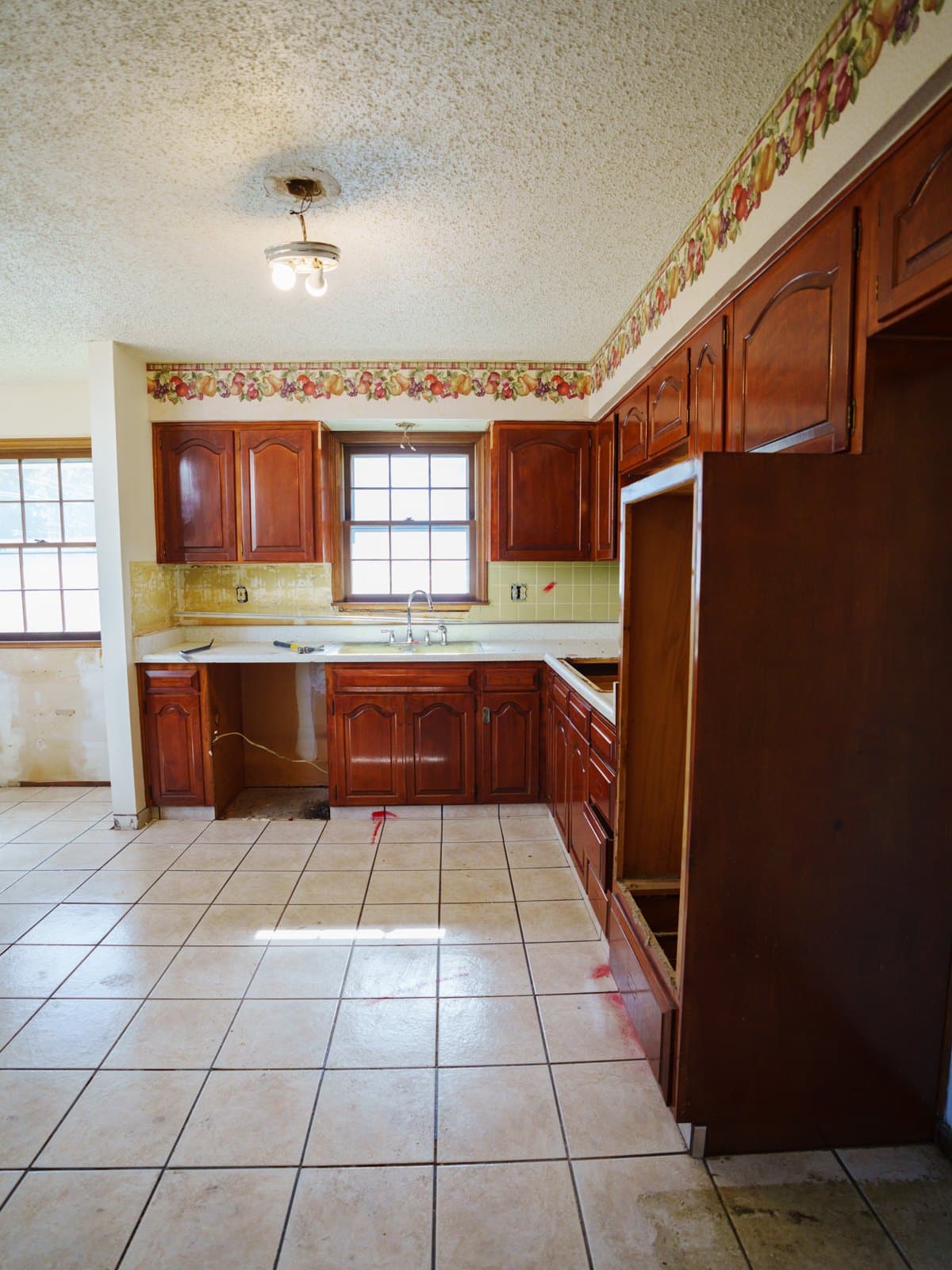
Almost every financed buyer orders a home inspection, and most KC buyers add a sewer scope and radon test. On homes built before 1960 in Waldo, Brookside, the Northeast, Independence, Raytown or KCK, the inspector tends to find the same things:
- Roofs near the end of their life, often with hail damage from a past storm.
- Foundation settling and wall cracks from the expansive clay soil the whole metro sits on.
- Galvanized supply lines with low pressure, and clay or Orangeburg sewer lines with root intrusion.
- Knob-and-tube or cloth wiring and undersized panels in pre-1950 houses.
- Radon above the EPA action level, which is common across the metro.
The buyer then asks for repairs, a repair credit or a price cut. A sewer line replacement alone can run several thousand dollars. A roof is more. Many sellers who list an older home end up giving back $5,000 to $10,000 after inspection, and FHA and VA appraisers can require certain repairs before the loan will close. This is the gap a cash buyer closes by purchasing as-is; here is what selling as-is actually looks like in Kansas City.
Holding costs while you wait
Holding costs are everything you pay to own the house between the day you decide to sell and the day you get paid. Kansas City homes typically take several weeks to go under contract in the current market, and that stretches in late fall and winter when fewer buyers are looking. Add a 30 to 45 day financed closing and you are often carrying the home for two to three months:
- Mortgage interest and escrow payments
- Homeowners insurance, which costs more if the home is vacant
- Utilities, including keeping the furnace running through a KC winter
- Lawn care, snow removal and any HOA dues
At $1,300 to $1,500 a month, three months costs $4,000 or more, and that assumes the first contract closes.
Pre-listing costs and the deal that falls apart
Before the first showing, most listings need a deep clean, touch-up paint, a dumpster run and sometimes staging if the house is empty. Two to four thousand dollars is a realistic range for a modest prep job. Then there is the cost nobody puts on a spreadsheet: the contract that dies. If the buyer’s financing is denied or the appraisal comes in under the contract price, you go back on the market, the listing looks stale, and the holding-cost meter restarts.
What a cash sale costs instead
A cash home buyer removes most of the lines above. There is often no agent commission, no repairs and no staging, and some cash buyers cover some closing costs. Ask every buyer which costs they pay, in writing. Closing can often happen faster because there is no buyer’s lender or appraisal, but the date depends on the transaction and title work. The trade-off is simple: the offer is below what a fully renovated version of your house would sell for on the open market.
It helps to know how that number gets built. A cash buyer starts with the after-repair value (what the home would sell for fixed up), then subtracts the cost of the repairs, their own holding and resale costs, and a profit margin. The percentage varies with the condition of the house and the neighborhood, so be wary of anyone quoting a fixed discount before seeing the property.
Worked example: one $275,000 house, two columns
Take a 1950s three-bedroom in Raytown or south Kansas City with an aging roof, original galvanized plumbing and an unfinished basement. A real estate agent says it could list at $275,000 if it shows well. The numbers below are illustrative general market figures, not a Best Offer KC offer; every house is priced on its own and quoted in writing.
Traditional listing
- List and contract price: $275,000
- Commission at 5.5 percent: $15,125
- Seller closing costs and tax proration: about $4,000
- Inspection repairs or credit: $6,000
- Buyer closing-cost concession: $3,000
- Pre-listing prep: $2,000
- Three months of holding costs: $4,000
- Estimated net before mortgage payoff: about $240,900
Cash offer
- Written offer: suppose it comes in at $235,000
- Commission, repairs, prep and concessions: $0
- Holding costs for a faster close: usually less than a listing
- Estimated net before mortgage payoff: about $234,500
The headline gap is $40,000. The real gap is closer to $6,000, and it shrinks further if the listing sells below asking, needs a second price cut, or loses its first buyer. Now flip the scenario: a move-in-ready home in Lee’s Summit or Olathe with a new roof and updated systems. Repairs and concessions drop toward zero, the home sells faster, and the listing nets $250,000 or more. In that case, listing wins, and a good cash buyer will tell you so.
Decision checklist
A traditional sale usually nets more when
- The home is updated and will pass inspection without major findings.
- You have no deadline and can carry the house for three months or longer.
- You are in a high-demand pocket where multiple offers are still common.
A cash sale usually nets more, or close to it, when
- The house needs a roof, foundation, sewer or electrical work you do not want to fund.
- You are facing foreclosure, a job relocation, probate or a divorce timeline.
- The home is vacant, inherited or occupied by a tenant you cannot show around.
Questions to ask any cash buyer
- Can you show proof of funds today? Here is what is proof of funds and why it matters.
- Who pays the title company’s fees and the owner’s policy?
- Are there any transaction, processing or administrative fees on the seller’s side?
- Is the offer contingent on an inspection, and can the price change after it?
- Will you close yourself or assign the contract to another investor?
For a longer list of red flags, see how to protect yourself when selling your home.
How Best Offer KC builds its offer
Best Offer KC gives Kansas City homeowners a free, written, no-obligation offer. We consider the house’s condition, comparable sales, expected costs, your timeline, and the transaction structure, and we explain how we reached the offer before you sign. You do not pay us a real estate agent commission when you sell directly to us, any costs are explained in writing before you decide, and the house is bought as-is. Tell us the date you need and we will explain what is realistic. Sellers who need time to find their next place can ask whether a lease-back may fit their situation; see sell your house without the rush to move out. Put the offer next to a realtor’s net sheet, and pick whichever column is bigger. If you want that number, call (816) 844-6224 or get a free cash offer on your Kansas City house and compare for yourself.

